

Understanding Piano Restoration vs. Rebuilding, Refurbishing, and Reconditioning
When evaluating an aging instrument, the terminology used by technicians and rebuilders can sometimes sound interchangeable. However, piano restoration, rebuilding, refurbishing, and reconditioning represent distinct levels of intervention. Understanding these differences helps you make informed choices based on your instrument’s age, structural health, tone quality, and monetary or sentimental value.
An acoustic piano is both a fine musical instrument and a complex machine containing over 12,000 individual parts. Over decades of play and ambient humidity fluctuations, structural elements like the soundboard, bridges, and pinblock slowly degrade, while mechanical components like felt hammers, key bushings, and springs suffer wear. Determining whether your instrument requires surface-level reconditioning or a complete structural rebuilding is the crucial first step in any preservation project.
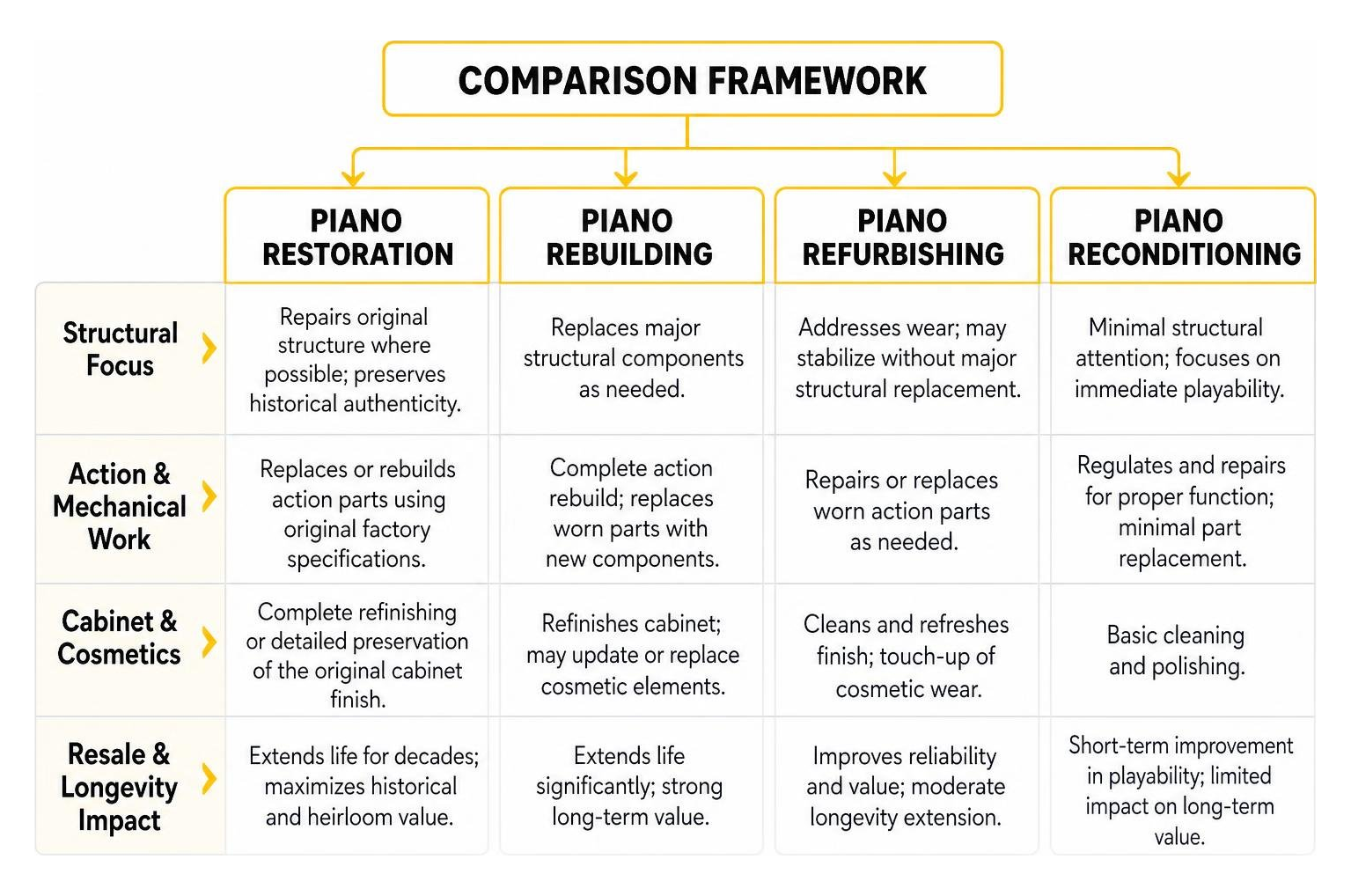
To clarify how these pathways differ in real-world application, we can break them down across four key parameters:
| Procedure | Structural Focus | Action & Mechanical Work | Cabinet & Cosmetics | Resale & Longevity Impact |
|---|---|---|---|---|
| Piano Restoration | Repairs original structure where possible; preserves historical authenticity. | Replaces or rebuilds action parts using original factory specifications. | Complete refinishing or detailed preservation of the original cabinet finish. | Extends life for decades; maximizes historical and heirloom value. |
| Piano Rebuilding | Full replacement of soundboard, pinblock, bridges, and structural elements. | Complete replacement of modern action parts, hammers, shanks, and wippens. | Complete strip and refinish, hardware replating. | Returns instrument to “like-new” performance; costs 1/2 to 2/3 of a new piano. |
| Refurbishing | No major structural work; leaves soundboard and pinblock as-is. | Targeted adjustments, spot repairs, key leveling, minor part swapping. | Basic cleaning and polish; no major cabinet refinishing. | Budget-friendly option; improves immediate playability without altering market value. |
| Reconditioning | Deep cleaning; tightening of original structural joints and hardware. | Filing hammers, partial restringing, full regulation, and voicing. | Minor finish touch-ups, brass polishing, keytop cleaning. | Re-establishes optimal performance for structurally sound vintage instruments. |
For a deeper look into selecting the precise path for your instrument, read our comparison on Piano Reconditioning vs Piano Full Restoration.
Candidates and Criteria: Is Your Instrument Right for a Full Piano Restoration?
Not every piano requires or justifies a complete overhaul. One instrument may require rebuilding after just twenty years of aggressive use in a conservatory, while another may need only light reconditioning after fifty years in a climate-controlled home. Understanding structural health requires evaluating the crown of the soundboard, torque resistance of the tuning pins, and integrity of the rim construction.
The ideal candidates for comprehensive piano restoration or rebuilding typically fall into two main categories:
- High-Tier Golden Age Pianos: Top-tier historic instruments (such as vintage Steinway & Sons, Mason & Hamlin, or Baldwin grand pianos) possess superior wood quality and structural design. Rebuilding these instruments allows them to perform at or above the level of modern assembly-line pianos at one-half to two-thirds the cost of purchasing a brand-new comparable model.
- Family Heirloom Instruments: Pianos passed down through generations carry immense personal value. Even if the open market value of a vintage upright is modest, preserving the stories, original aesthetic, and family connection makes targeted restoration work invaluable.
A properly restored and maintained piano can remain viable and valuable for over a hundred years. When deciding whether to invest in major work, evaluate the instrument’s overall soundboard condition, tuning pin tightness (pinblock integrity), cabinet craftsmanship, and total replacement cost. To learn more about how we evaluate and safeguard family instruments, explore How Gifted Strings Helps Preserve Family Heirloom Pianos.
Inside the Workshop: The Step-by-Step Piano Restoration Process
When an instrument enters a professional workshop, it undergoes a systematic disassembly and remanufacturing process designed to restore both visual elegance and musical power. Every stage requires exacting tolerances to ensure the instrument withstands the nearly 20 tons of combined string tension exerted across the iron plate.
- Evaluation and Disassembly: The piano is fully inspected and documented. The heavy cast-iron plate (strung frame) is carefully unbolted and hoisted, strings are unstrung under controlled tension release, and the intricate action framework is removed from the keybed for detailed bench examination.
- Structural Repairs & Pinblock Replacement: If the tuning pins no longer hold tight pitch, a new quarter-sawn hard rock maple pinblock is custom-fitted to the cast-iron plate. Cracks in the solid spruce soundboard are repaired using matching wood shims, or the soundboard is completely replaced while restoring proper acoustic crown. Bridges are re-capped with hard maple to ensure full vibrational transfer from strings to soundboard.
- Restringing and Hardware Replating: High-tensile musical treble wire and custom hand-wound bass strings are installed over pristine bridge pins. Iron plates are sandblasted, primed, and recoated in traditional bronzing lacquers or gold leafing, while original nickel or brass hardware is meticulously polished or re-plated.
- Cabinet Refinishing: The wooden cabinet is stripped of degraded lacquer, shellac, or varnish. Damaged rare wood veneers are repaired or replaced, re-stained to match the client’s preferred aesthetic finish, and sealed with durable, high-clarity protective topcoats.
- Action Rebuilding and Assembly: New felt hammers, shanks, flanges, and wippens (repetition levers) are installed. Original ivory or acrylic keytops are repaired or replaced, lead weights are dynamically calibrated inside the key sticks, ensuring precise weight and fluid balance across all 88 keys.
Mechanical Care and Fine-Tuning During Piano Restoration
Once structural reassembly is complete, the delicate process of mechanical calibration begins. A piano contains thousands of moving parts made of wood, felt, leather, and metal. Over time, seasonal humidity shifts cause wood to expand and contract, stretching strings and destabilizing mechanical clearances.
During workshop calibration, technicians perform three critical procedures:
- Action Regulation: Adjusting key travel, let-off, drop, backcheck alignment, and repetition spring tension so that the keys respond uniformly and predictably to every dynamic touch from pianissimo to fortissimo.
- Hammer Voicing: Softening or hardening the hammer felts using specialized needle tools or hardening solutions to achieve a rich, warm, and balanced tonal palette across all treble, tenor, and bass registers.
- Pitch Raises and Tuning: Newly installed strings stretch rapidly under thousands of pounds of tension. While a standard maintenance tuning usually takes about 2 hours, bringing a newly restored or severely neglected instrument up to standard pitch requires additional pitch raises taking an extra 1-2 hours total, followed by multiple stabilizing tunings over several weeks.
To protect this precise mechanical work after restoration, maintaining indoor humidity stability between 40% and 50% is essential for preventing string slippage, action binding, and soundboard stress.
Evaluating Workshop Standards: Choosing the Right Restoration Specialist
Entrusting your instrument to a workshop requires careful verification of craftsmanship standards, facilities, and service offerings. Because major restoration is a generational investment, choosing a qualified technician ensures your instrument’s historical authenticity and musical performance are preserved without compromise.
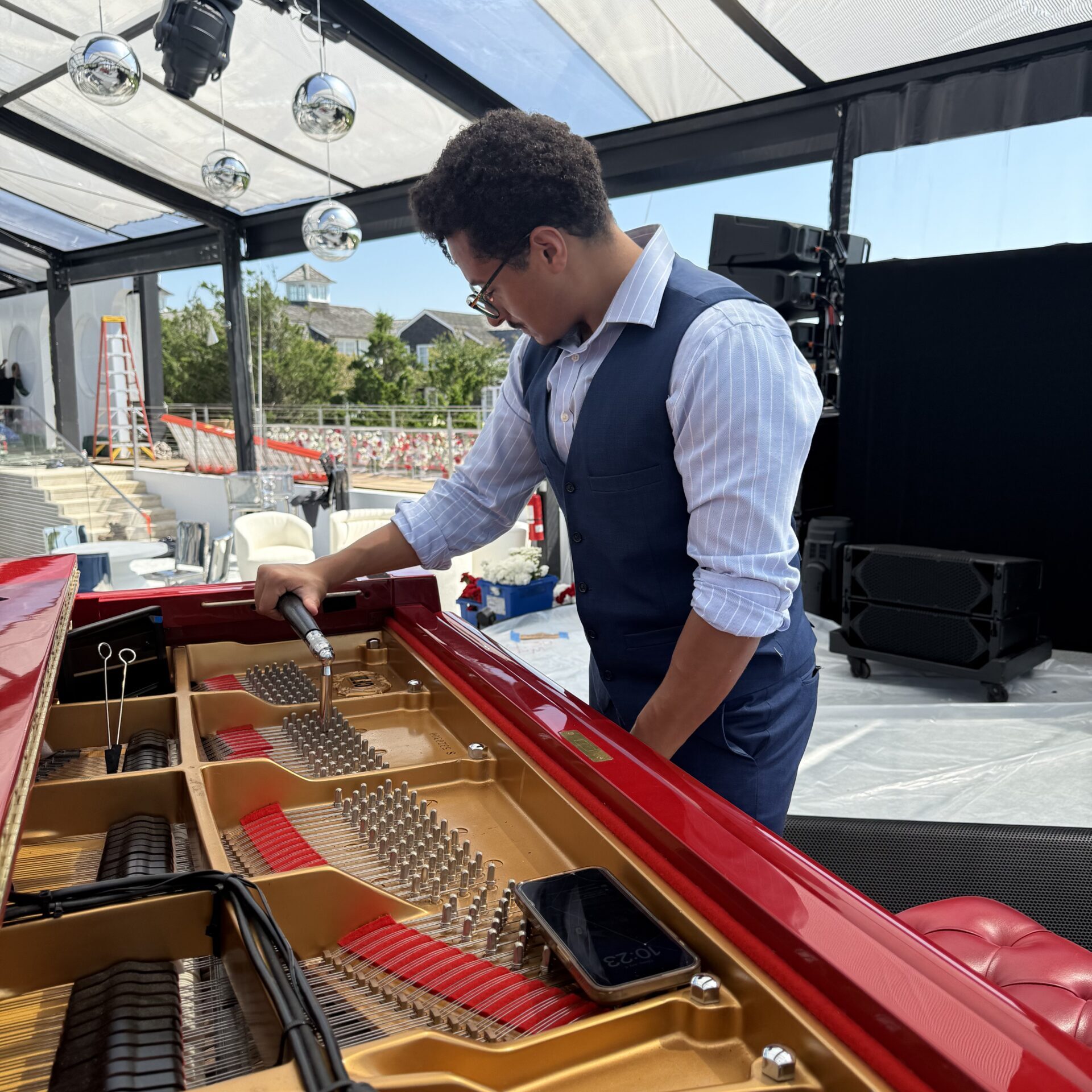
When selecting a restoration facility, ensure the technicians adhere to strict industry standards, such as those established by the Piano Technicians Guild. Look for shops that utilize original manufacturer parts (such as authentic Steinway parts for Steinway pianos) and offer comprehensive multi-year warranties covering both structural parts and mechanical labor. A dedicated workshop should also maintain a climate-controlled environment to protect exposed soundboards, pinblocks, and action components during work.
Additionally, pay close attention to the logistics surrounding the project. Moving a delicate grand or upright piano into a workshop requires heavy equipment, specialized vehicles, padded skid boards, and expert handling to prevent cabinet scuffs or structural damage. Working with a facility that manages transportation internally eliminates third-party liability risks and guarantees seamless accountability from your home to the workshop floor. Discover the advantages of unified logistics in our guide on Why Choosing One Company for Piano Moving and Repair Makes a Difference.
Frequently Asked Questions About Piano Maintenance and Restoration
How long does a complete restoration or rebuild usually take?
A complete rebuild or comprehensive piano restoration typically takes anywhere from 3 to 9 months, depending on the scope of cabinet refinishing, soundboard woodworking, and specialized part availability. Structural woodworking, finish curing, and multiple string stretch-and-tune cycles require dedicated time in a controlled workshop environment to ensure long-term pitch stability and structural durability.
How much does piano rebuilding cost relative to a new instrument?
Rebuilding or restoring a high-quality vintage piano generally costs between one-half to two-thirds the price of a comparable modern performance-grade instrument. This makes major rebuilding a highly cost-effective strategy for acquiring or maintaining a world-class piano with superior tonal richness and historic character.
Are loaner pianos available while my instrument is in the shop?
Yes, reputable full-service restoration shops often provide loaner instruments for home practice or institutional use while your piano is undergoing major work in the shop. Be sure to inquire about interim practice instruments during your initial consultation so your musical routine remains uninterrupted.
Conclusion
A piano is far more than furniture—it is an intricate mechanical instrument capable of inspiring generations of musicians. Whether you are seeking to preserve an irreplaceable family heirloom or restore a classic grand piano to concert-hall standards, investing in expert piano restoration protects your instrument’s structural integrity, playability, and long-term value.
At Gifted Strings Music, our fully insured team brings over a decade of precision, instrument-specific care to musicians, homes, and institutions across Long Island, NY. From specialized moving and action regulation to total structural rebuilding, we handle every detail of your piano’s journey under one roof.
Ready to discover the potential hidden within your instrument? Explore our dedicated Piano Restoration Service, check out our full range of Services, or reach out via our Contact page to schedule your technical consultation today.