

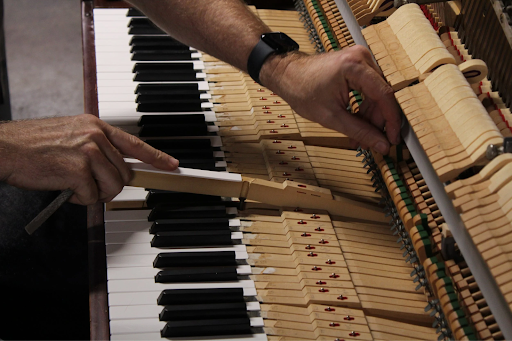
If you own a piano in Long Island or anywhere in the Northeast, humidity is one of the most important and often overlooked, factors affecting your instrument’s health. Pianos are made primarily of wood, felt, and metal, all of which react to changes in moisture levels. In a region known for hot, humid summers and dry, heated winters, those fluctuations can quietly take a toll on your piano’s sound, stability, and longevity.
Understanding how humidity impacts your piano is the first step toward protecting it year-round.
Why Pianos Are So Sensitive to Humidity
A piano is not a sealed object. Its soundboard, pin block, keys, and internal action parts are constantly responding to the air around them. When humidity rises, wood absorbs moisture and expands. When humidity drops, wood releases moisture and contracts.
These changes may be subtle day to day, but over time they affect tuning stability, touch response, and structural integrity. In coastal and seasonal climates like Long Island, those swings can happen multiple times a year, and sometimes within the same month.
At Gifted Strings, this is one of the most common underlying issues we see when servicing pianos that haven’t been regularly maintained.
Summer Humidity: Swelling, Sticking, and Pitch Changes
During Northeast summers, humidity levels can climb well above what a piano prefers. High moisture causes wooden components to swell, which can lead to:
- Keys that feel sluggish or stick
- Dampers that don’t release cleanly
- Action parts that lose precise alignment
- A gradual drop in pitch as string tension shifts
Excess moisture also stresses the soundboard, which plays a major role in tone production. Over time, prolonged exposure to high humidity can contribute to cracks, loose ribs, or uneven tonal response.
Regular piano tuning during the summer months helps counteract these effects, but humidity control is equally important.
Winter Dryness: Shrinking Wood and Structural Stress
Winter presents the opposite challenge. As homes rely on heating systems, indoor air becomes extremely dry, often far drier than outdoor conditions. This lack of moisture causes wood to contract, which can result in:
- Sharper pitch and unstable tuning
- Hairline cracks in soundboards or bridges
- Loose tuning pins
- Increased wear on felt and action components
Many homeowners assume that problems appearing in winter are purely mechanical, but dryness is often the root cause. At Gifted Strings, winter service calls frequently reveal humidity-related stress that could have been prevented with proactive care.
Why Seasonal Swings Matter More Than Steady Conditions
It’s not just high or low humidity that affects a piano, it’s rapid change. Long Island and Northeast homes experience dramatic seasonal transitions, sometimes within weeks. A piano that swells in August and contracts in January is under constant stress.
Repeated expansion and contraction weakens joints, alters regulation, and shortens the lifespan of internal components. This is why pianos in this region require more attentive care than those in more stable climates.
Placement Matters More Than Most People Realize
Where your piano sits in your home can either protect it or expose it to unnecessary humidity stress. Problem areas include:
- Near exterior walls
- Close to windows or sliding doors
- Above heating vents or radiators
- In basements without climate control
Moving a piano, even within the same house, can change its exposure dramatically. After any relocation, a period of acclimation followed by inspection and tuning is essential. Gifted Strings often recommends post-move service specifically to address humidity-related shifts that occur once the piano settles into a new environment.
Humidity Control Is Preventive Care, Not a Luxury
Consistent humidity control helps stabilize tuning, preserve tone, and reduce long-term repair costs. Simple tools like room humidifiers, dehumidifiers, or climate monitoring devices can make a measurable difference.
In some cases, especially for frequently played or valuable instruments, internal humidity control systems may be recommended. These systems regulate moisture directly inside the piano, providing year-round stability regardless of outside conditions.
When paired with regular piano tuning and inspections, humidity control becomes one of the most effective ways to protect your investment.
When to Call a Professional
If your piano won’t stay in tune, keys feel different depending on the season, or the instrument hasn’t been serviced in years, humidity is likely part of the issue. Professional technicians can identify early warning signs before they turn into costly repairs.
At Gifted Strings, our approach combines tuning, repair, and environmental assessment, because a piano’s condition is always tied to the space it lives in. Addressing humidity proactively helps ensure your piano continues to sound, feel, and perform the way it should.
Final Thoughts
Humidity is an unavoidable part of life in Long Island and the Northeast, but damage doesn’t have to be. By understanding how seasonal moisture affects your piano, and taking steps to manage it, you can extend the life of your instrument and enjoy consistent performance year after year.
With thoughtful placement, proper humidity control, and regular professional care, your piano can thrive even in a challenging climate.