

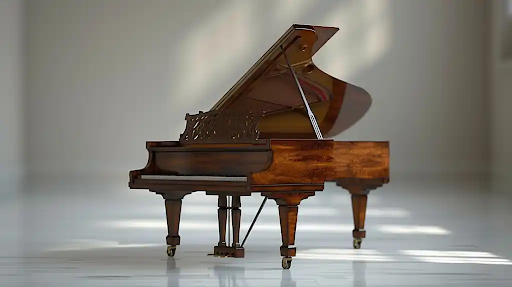
If your piano sounds bright and sharp one season, then dull or uneven the next, you’re not imagining it. Seasonal changes, especially in Long Island and Northeast homes, have a direct impact on how a piano sounds and feels. Temperature and humidity shifts affect the wood, strings, and internal mechanics of the instrument, often changing tone, touch, and tuning stability throughout the year.
Understanding why this happens can help you care for your piano more effectively and avoid long-term issues.
Pianos Are Living Instruments
Although a piano may look solid and stationary, it is constantly responding to its environment. A typical piano contains thousands of parts made from wood, felt, and metal. The soundboard alone, arguably the heart of the instrument, is crafted from carefully dried wood that expands and contracts with moisture in the air.
In regions like Long Island, where summers are humid and winters are dry due to indoor heating, pianos experience significant environmental stress. At Gifted Strings, seasonal sound changes are one of the most common concerns piano owners ask about.
What Happens in the Summer
During summer months, humidity levels rise. Moisture in the air is absorbed by the piano’s wooden components, causing them to swell. This affects several areas at once:
- The soundboard expands, increasing tension and subtly altering tone
- Action parts may lose precise alignment
- Keys can feel heavier or slower
- Pitch often drops slightly as string tension changes
High humidity can also lead to dampers not lifting cleanly and a less crisp sound overall. While these changes may feel gradual, they are cumulative, especially in homes without climate control.
This is why many pianos feel “off” during peak summer months. Regular seasonal tuning helps compensate for these changes, but humidity control plays an equally important role.
What Happens in the Winter
Winter creates the opposite environment. As heating systems dry the air, moisture is pulled from the piano’s wooden parts. This drying causes the wood to contract, which can result in:
- Sharper pitch and unstable tuning
- Increased string tension
- Hairline soundboard cracks
- Looser tuning pins over time
Keys may feel lighter, and the tone can become brittle or uneven. These shifts don’t happen overnight, but repeated dry winters can lead to long-term structural stress if not addressed.
At Gifted Strings, winter service calls often reveal that dryness, not mechanical failure, is the underlying cause of many tonal and tuning problems.
Why the Swing Between Seasons Matters Most
It’s not just summer or winter that affects a piano, it’s the transition between the two. Northeast homes experience wide swings in humidity levels, sometimes within a matter of weeks. Each cycle of swelling and shrinking puts stress on joints, glue bonds, and action regulation.
Over time, this repeated movement can shorten the life of internal components and make the piano increasingly difficult to keep in tune. This is why pianos in this region require more consistent care than those in milder climates.
Placement Can Amplify Seasonal Effects
Where your piano sits in your home can dramatically influence how much it’s affected by seasonal changes. Common problem areas include:
- Exterior walls
- Near windows or sliding doors
- Close to heating vents or radiators
- Basements without humidity control
Even moving a piano from one room to another can change its exposure. After a move, whether across town or within the same house, allowing time for acclimation before tuning is essential. Gifted Strings often recommends post-move inspections to identify humidity-related changes early.
Stabilizing Sound Year-Round
While seasonal changes can’t be eliminated, their impact can be reduced. Consistent humidity control helps keep wood movement to a minimum, stabilizing both tone and tuning. Simple tools like room humidifiers, dehumidifiers, and digital humidity monitors can make a noticeable difference.
For frequently played or valuable instruments, internal humidity control systems may be recommended. Combined with regular piano tuning and periodic regulation checks, these measures help ensure the piano responds consistently throughout the year.
Professional technicians don’t just tune strings, they evaluate how the instrument is interacting with its environment.
When to Schedule Service
If your piano sounds noticeably different from one season to the next, that’s normal, but it’s also a signal. Seasonal tuning, occasional repairs, and environmental assessment all work together to keep your piano healthy.
At Gifted Strings, we take a holistic approach to piano care, considering not just the instrument itself but the space it lives in. Addressing seasonal changes proactively helps prevent minor shifts from becoming major repairs.
Final Thoughts
Seasonal sound changes are a natural part of piano ownership, especially in Long Island and Northeast homes. Summer humidity and winter dryness affect every piano differently, but the underlying cause is always the same: wood responding to moisture in the air.
With thoughtful placement, humidity awareness, and regular professional care, your piano can sound balanced and expressive year-round, no matter the season.