

Why You Need Professional Junk Removal Piano Services
When an old piano sits unplayed in a corner, it slowly transforms from a musical centerpiece into a massive space barrier. Attempting to get rid of it yourself, however, quickly reveals why junk removal piano experts exist. Moving an acoustic piano is fundamentally different from moving a sofa or an armoire.
Pianos feature an internal cast-iron plate (or harp) that holds thousands of pounds of string tension. This concentrated metal core creates an extremely uneven center of gravity. Without specialized rigging, heavy-duty dollies, and trained crew members, attempting to move one puts your home and physical safety at severe risk. Professional removal safety is essential to prevent costly structural damage to doorways, walls, and flooring.
The Risks of DIY Piano Hauling
The sheer physical weight of these instruments is astounding. An upright piano typically weighs between 300 and 500 pounds, while a grand piano or baby grand piano easily reaches 500 to 1,200 pounds or more. In fact, a concert grand piano can exceed 1,200 pounds!
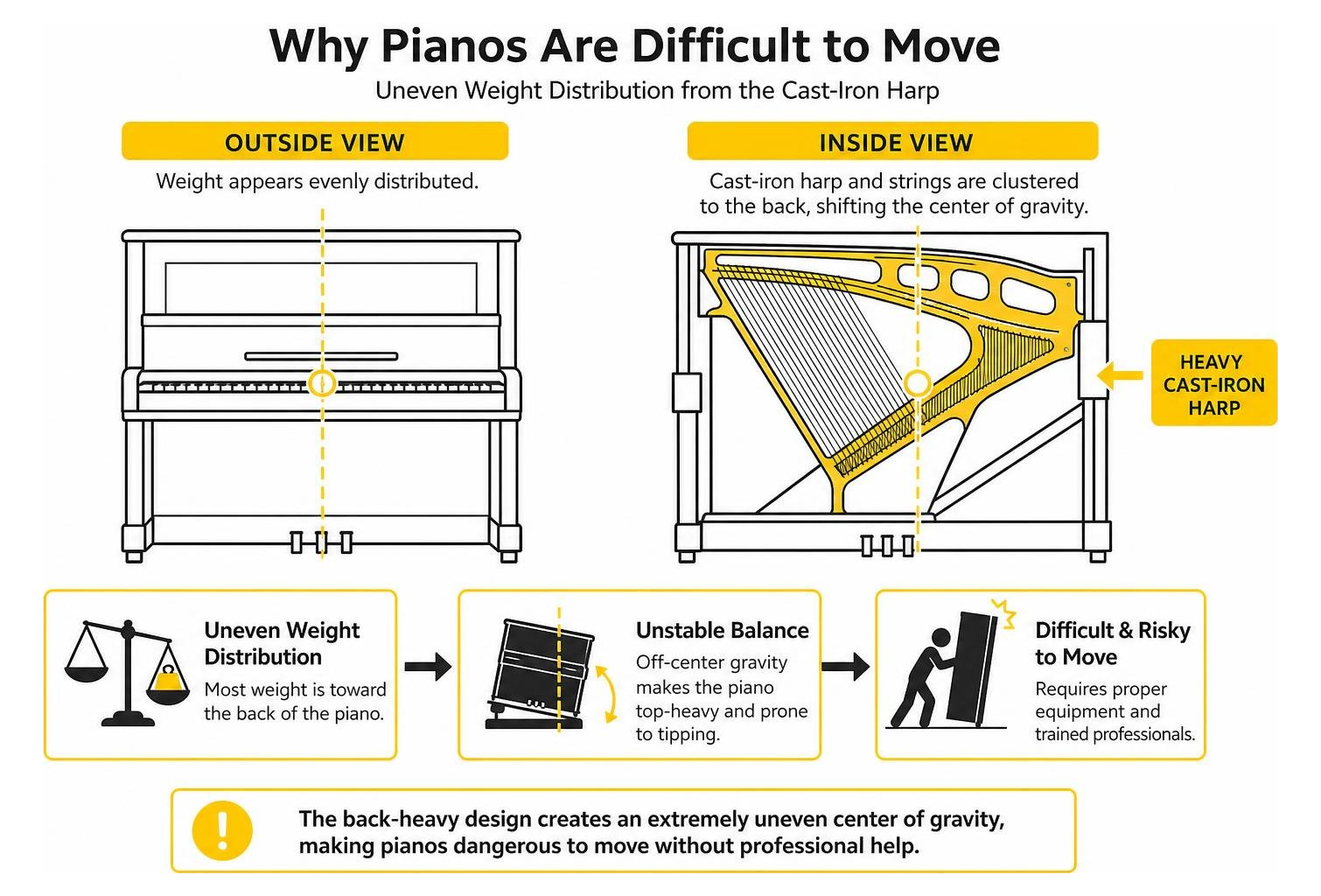
Attempting a DIY haul poses several serious hazards:
- Extreme String Tension: Acoustic piano strings are stretched under immense tension across the cast-iron plate. Damaging the structural frame during a botched move can cause dangerous mechanical failures.
- Awkward Dimensions: Pianos are top-heavy and narrow, making them prone to tipping over when pivoted around tight turns.
- Property Damage: Without professional floor protection and specialized furniture pads, a rolling or sliding piano can instantly gouge hardwood, crush tile, or tear carpet.
To understand the immense care required during instrument transport, review our detailed guide on How to Safely Move a Piano: Tips for Transporting Your Most Treasured Instrument.
Why Charities Often Reject Piano Donations
Many homeowners assume that donating an unwanted instrument to a local church, school, or non-profit is a quick, philanthropic solution. However, you might be surprised to find your offer politely declined.
Charitable organizations reject piano donations for several practical reasons:
- Transportation Friction: The cost to haul a 400-pound instrument often exceeds the non-profit’s logistics budget.
- Expensive Maintenance and Tuning Costs: Pianos that have sat unmaintained for years frequently require extensive action repairs, pitch raises, or structural work just to become playable.
- Preference for Portable Equipment: Most modern institutions prefer portable digital keyboards that never go out of tune, take up minimal floor space, and can be moved without hired labor.
- Evaluation Delays and Strict Rules: Organizations that do accept instrument donations often require multi-step questionnaires, photo submissions, serial number checks, and a 3 to 7 day evaluation period before making a decision.
Evaluating Your Piano: Types, Conditions, and Disposal Options
Before scheduling a junk removal piano pickup, it is worth conducting a basic instrument assessment. Some older instruments hold genuine sentimental or financial value, while others are structurally past the point of no return.
If you are unsure whether your instrument can be saved, having an acoustic evaluation from a professional technician can prevent you from prematurely throwing away a restorable masterpiece. Learn more about evaluating an aging instrument through our Piano Restoration Service.
Upright, Grand, and Digital Pianos Handled by Junk Removal Piano Teams
Professional hauling teams are equipped to remove virtually any key-driven instrument, regardless of shape or scale:
- Spinet Pianos: The smallest acoustic uprights (around 36 to 39 inches tall), known for drop-action mechanisms and lightweight frames.
- Console and Studio Uprights: Standard residential uprights ranging from 40 to 48+ inches tall, featuring heavy wooden cabinets and substantial iron plates.
- Baby Grand and Concert Grand Pianos: Horizontal instruments requiring leg and pedal desk disassembly before safe transport.
- Organs and Digital Keyboards: Large electric or pipe organs with heavy pedal boards, as well as modern electronic keyboards.
Repair, Restoration, or Disposal: Making the Right Choice
How do you decide between keeping an old instrument or calling a removal team? Most old upright pianos have little resale value unless they are rare, historic, or fully restored. If the pinblock is cracked, the soundboard is severely split, or the internal action is damaged by pests or humidity, disposal or component salvaging is usually the most economical path forward.
To help evaluate your instrument’s future, review our guide on Piano Reconditioning vs Piano Full Restoration: Which Path Fits Your Piano?.
| Service Path | Best Suited For | Expected Outcome |
|---|---|---|
| Full Restoration | High-value grand pianos or cherished family heirlooms | Complete structural rebuild, new strings, soundboard repair, refinishing |
| Reconditioning | Structurally sound pianos needing action tuning and minor repairs | Thorough cleaning, regulation, voicing, and pitch tuning |
| Junk Removal / Disposal | Broken, water-damaged, pest-infested, or unplayable instruments | Safe removal, component separation, metal recycling, and eco-disposal |
Cost Factors and Eco-Friendly Piano Disposal
When an instrument cannot be saved or donated, eco-friendly disposal solutions take priority. Pianos should not simply be dumped in a landfill. In fact, most landfills won’t accept pianos because they contain a complex mix of wood, metal, and felt, which are all materials that don’t break down easily in municipal waste streams.
How Pricing for Junk Removal Piano Services is Determined
Because of their immense weight and specialized labor requirements, pianos generally fall under specific surcharge pricing tiers rather than basic volume rates.
Key factors that influence your quote include:
- Truck Volume: Standard hauling vehicles often utilize mini dump trucks with a 16 cubic yard capacity. A piano occupies a notable footprint within that space.
- Heavy Item Surcharges: Additional fees account for extreme weight and physical labor.
- Stair and Navigational Complexity: Navigating tight turns, exterior steps, or basement stairwells requires extra crew members and specialized rigging equipment.
Always request a clear, upfront estimate before labor begins so there are no surprises on haul-away day.
Recycling, Repurposing, and Component Separation
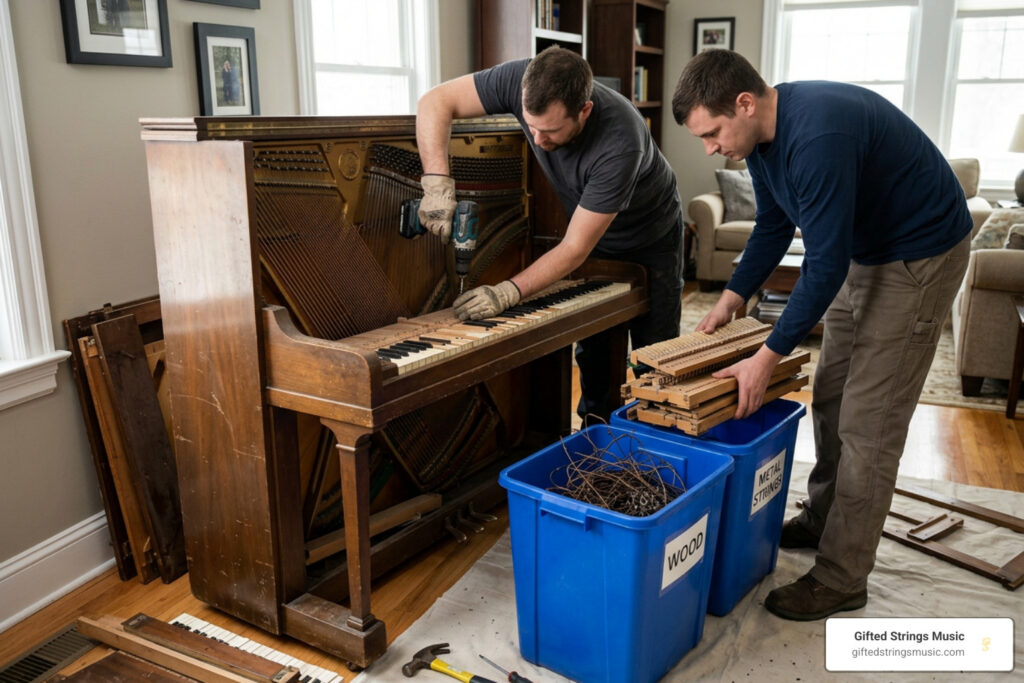
Sustainable disposal involves disassembling the instrument to sort its raw materials:
- Cast-Iron Frame Recycling: The heavy cast-iron plate (or harp) is removed and sent to metal scrap recyclers.
- Wood Repurposing: High-grade cabinetry wood can be salvaged for woodworking, upcycling into custom furniture (like bookshelves or home bars), or processed at material facilities.
- Lead Key Weights: Keyboards contain small internal lead balancing weights that are handled responsibly to protect the environment.
- Ivory Key Restrictions: Older piano keys may contain genuine ivory. Transferring or selling antique ivory carries strict legal restrictions under ivory trade regulations, so keys must be evaluated carefully prior to disposal or crafting.

Recyclable piano components typically include:
- Heavy cast-iron harps and structural plates
- Steel music wire and copper-wound bass strings
- Solid wood cabinets, music desks, and outer casing
- Brass pedals, hinges, and casters
In industrial processing facilities, unrecoverable frames may be handled by a specialized piano shredder to separate metals from felt and wood automatically.
How to Prepare for Removal from Complex Locations
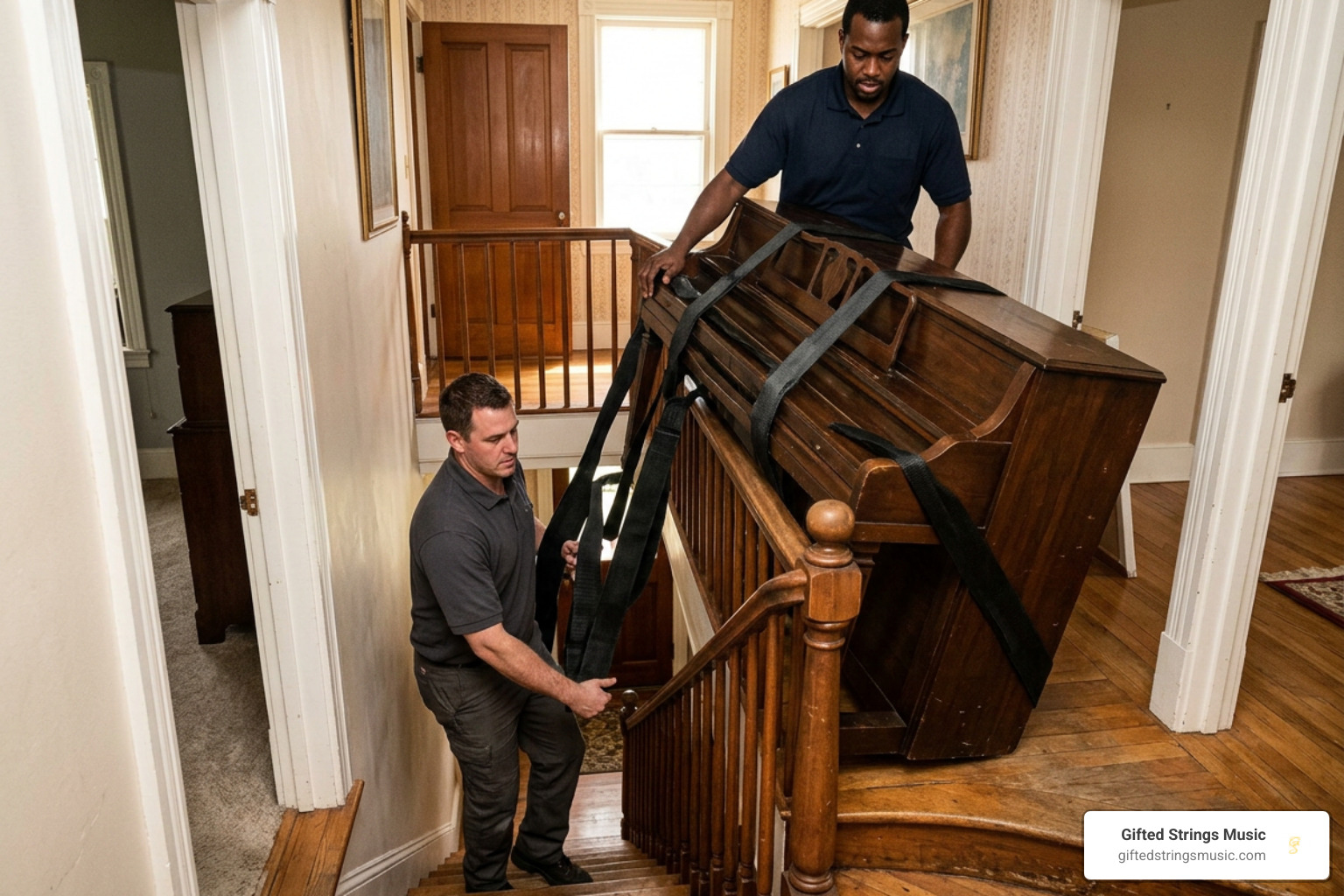
Getting a 400-pound box out of a tight second-floor bedroom or dark basement requires careful preparation. Moving crews rely on a clear access path to ensure everyone stays safe.
Basement and Upstairs Piano Extraction Checklist
Navigating narrow doorways, tight hallways, and steep stairwells demands systematic execution.
Follow these preparation steps:
- Clear the Exit Path: Remove throw rugs, hall tables, wall frames, and floor lamps along the entire path to the driveway.
- Secure Loose Parts: Tape down the keyboard lid and ensure music stands are folded flat.
- Check Clearance: Measure narrow doorframes and stairwells to confirm adequate turning radius.
- Inform the Crew: Disclose any broken steps, tight landings, or steep outdoor inclines when requesting your initial estimate.
For a complete walkthrough on preparing your space for heavy lifting, check out our Home Prep Checklist: Make Piano Moving Day Smooth and Safe and discover why homeowners rely on our expertise by reading Protecting Your Instrument: Why Homeowners Trust Gifted Strings for Piano Moving.
Frequently Asked Questions About Piano Disposal
Can a junk removal team take a piano out of a basement or upstairs?
Yes. Professional crews regularly handle complex basement and upper-floor extractions. They utilize specialized heavy-duty dollies, stairs-climbing gear, moving straps, and protective padding to maneuver tight stairwells safely without damaging your walls or steps.
What items cannot be removed alongside an old piano?
While hauling teams can clear out standard household junk, furniture, and electronics during the same visit, hazardous materials are strictly prohibited. Items that cannot be taken include paint cans, household chemicals, fuel containers, motor oil, biohazardous waste, and propane tanks.
What should I do if my piano is in unplayable condition and cannot be donated?
If your instrument is beyond repair and rejected by local charities, schedule a professional eco-friendly haul-away. The instrument will be disassembled so its cast-iron plate and steel strings can be sent to metal recycling centers, while the cabinet wood is diverted from municipal landfills whenever possible.
Conclusion
Saying goodbye to an old instrument doesn’t have to be stressful. Whether your goal is clearing out a cramped living room, managing an estate cleanout, or determining if a family heirloom can still be saved, taking a smart, eco-conscious approach protects both your home and your budget.
At Gifted Strings Music, we provide expert guidance for every stage of your instrument’s journey across Long Island—from precision tuning, moving, and repairs to full restorations. If you need assistance moving or evaluating a piano, Explore Our Piano Services today to discover how our fully insured, instrument-specific care can help.